



 Belarus / Brest region
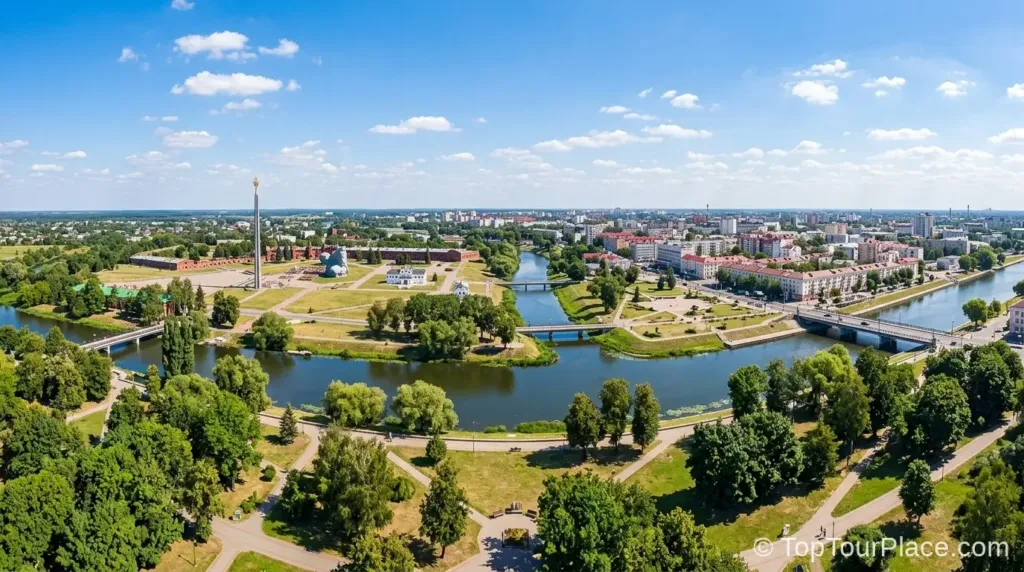
Brest is located at the confluence of the Mukhavets and Western Bug rivers, near the Polish border. The city covers an area of approximately 145 square kilometers and is approximately 160 meters above sea level. The population is approximately 350. The official languages are Belarusian and Russian, with Russian widely used in everyday life. English is widely used in tourism. Brest holds the titles of Hero City and City of Military Glory for its outstanding defense during World War II.
History
The history of Brest begins in the 10th century, when Slavic tribes founded a settlement on the banks of two rivers. The first written mention dates back to 1019, when Prince Yaroslav the Wise captured the local fortress. In the Middle Ages, Brest was an important defensive point for Kievan Rus', and later became part of the Grand Duchy of Lithuania, receiving Magdeburg Rights and becoming a major trading center.
In the 16th and 17th centuries, the city flourished as part of the Polish-Lithuanian Commonwealth, where Orthodox, Catholics, and Jews coexisted peacefully. After the partitions of Poland, Brest became part of the Russian Empire, where a powerful defensive complex—the Brest Fortress—was built.
The city endured severe trials in the 20th century. In 1918, the Treaty of Brest-Litovsk was signed here. In June 1941, the Brest Fortress was the first to bear the brunt of the German invasion, becoming a symbol of unwavering courage. After its liberation in 1944, the city was rebuilt and became one of the cultural centers of Belarus.
Economy
Modern Brest is a major industrial and logistics hub. Machine-building, food processing, textile, and furniture factories operate here. The city is an important transport corridor between Belarus and Poland, home to major customs terminals and warehouse complexes.
Population and religion
The majority of residents are Belarusians (approximately 85%), with Russians, Poles, Ukrainians, and Jews also residing. The main religion is Orthodox Christianity, with a significant portion of the population practicing Catholicism. The city hosts interfaith festivals and religious holidays that bring together the various communities.
Culture and Traditions
Brest is renowned for its hospitality. Guests are traditionally greeted with bread and salt, and it's customary to remove shoes and bring a small gift to the host upon entering a home. Modesty in dress is expected in churches. The city boasts a vibrant cultural scene, with music festivals, craft fairs, theatrical events, and celebrations on the Mukhavets Embankment.
Sightseeings
The main attraction is the Brest Fortress memorial complex, with its Eternal Flame, the Thirst monument, and museums dedicated to the 1941 defense. Other attractions include:
– Museum of railway equipment with a collection of steam locomotives
– Pedestrian street Sovetskaya with cafes and historical buildings
– Church of the Holy Spirit, 17th century
– Regional Museum of Local History
– Walks along the Bug River and trips to Belovezhskaya Pushcha
Kitchen
Brest cuisine reflects Belarusian traditions: draniki with sour cream, kolduny (draniki), machanka (machanka) with pancakes, borscht, kvass, and mead. Tipping at restaurants is customary at 5–10%. Main meal times: breakfast 8:00–10:00, lunch 12:00–15:00, dinner 18:00–21:00.
Tourism
Brest attracts tourists with its combination of heroic history, cultural heritage, and the tranquil atmosphere of a border town. Historical, cultural, ecological, and gastronomic tourism are developing here. The best time to visit is from May to September.
Climate
The climate is temperate continental. Winter temperatures drop to -4°C, while summer temperatures hover around 18°C to 25°C. Spring and autumn are mild and comfortable for walking.
Why visit
Brest is a city where history and modernity harmoniously blend. Here, a spirit of heroism is palpable, cultural traditions are preserved, and a cozy atmosphere reigns, making travel truly memorable.
 Brest region
Brest is located at the confluence of the Mukhavets and Western Bug rivers, near the Polish border. The city covers an area of approximately 145 square kilometers and is approximately 160 meters above sea level. The population is approximately 350. The official languages are Belarusian and Russian, with Russian widely used in everyday life. English is widely used in tourism. Brest holds the titles of Hero City and City of Military Glory for its outstanding defense during World War II.
History
The history of Brest begins in the 10th century, when Slavic tribes founded a settlement on the banks of two rivers. The first written mention dates back to 1019, when Prince Yaroslav the Wise captured the local fortress. In the Middle Ages, Brest was an important defensive point for Kievan Rus', and later became part of the Grand Duchy of Lithuania, receiving Magdeburg Rights and becoming a major trading center.
In the 16th and 17th centuries, the city flourished as part of the Polish-Lithuanian Commonwealth, where Orthodox, Catholics, and Jews coexisted peacefully. After the partitions of Poland, Brest became part of the Russian Empire, where a powerful defensive complex—the Brest Fortress—was built.
The city endured severe trials in the 20th century. In 1918, the Treaty of Brest-Litovsk was signed here. In June 1941, the Brest Fortress was the first to bear the brunt of the German invasion, becoming a symbol of unwavering courage. After its liberation in 1944, the city was rebuilt and became one of the cultural centers of Belarus.
Economy
Modern Brest is a major industrial and logistics hub. Machine-building, food processing, textile, and furniture factories operate here. The city is an important transport corridor between Belarus and Poland, home to major customs terminals and warehouse complexes.
Population and religion
The majority of residents are Belarusians (approximately 85%), with Russians, Poles, Ukrainians, and Jews also residing. The main religion is Orthodox Christianity, with a significant portion of the population practicing Catholicism. The city hosts interfaith festivals and religious holidays that bring together the various communities.
Culture and Traditions
Brest is renowned for its hospitality. Guests are traditionally greeted with bread and salt, and it's customary to remove shoes and bring a small gift to the host upon entering a home. Modesty in dress is expected in churches. The city boasts a vibrant cultural scene, with music festivals, craft fairs, theatrical events, and celebrations on the Mukhavets Embankment.
Sightseeings
The main attraction is the Brest Fortress memorial complex, with its Eternal Flame, the Thirst monument, and museums dedicated to the 1941 defense. Other attractions include:
– Museum of railway equipment with a collection of steam locomotives
– Pedestrian street Sovetskaya with cafes and historical buildings
– Church of the Holy Spirit, 17th century
– Regional Museum of Local History
– Walks along the Bug River and trips to Belovezhskaya Pushcha
Kitchen
Brest cuisine reflects Belarusian traditions: draniki with sour cream, kolduny (draniki), machanka (machanka) with pancakes, borscht, kvass, and mead. Tipping at restaurants is customary at 5–10%. Main meal times: breakfast 8:00–10:00, lunch 12:00–15:00, dinner 18:00–21:00.
Tourism
Brest attracts tourists with its combination of heroic history, cultural heritage, and the tranquil atmosphere of a border town. Historical, cultural, ecological, and gastronomic tourism are developing here. The best time to visit is from May to September.
Climate
The climate is temperate continental. Winter temperatures drop to -4°C, while summer temperatures hover around 18°C to 25°C. Spring and autumn are mild and comfortable for walking.
Why visit
Brest is a city where history and modernity harmoniously blend. Here, a spirit of heroism is palpable, cultural traditions are preserved, and a cozy atmosphere reigns, making travel truly memorable.